Ever caught yourself holding your breath while scrolling through anxious news headlines? Or realized mid-day you’ve taken only three full breaths since breakfast — and all of them were shallow? You’re not broken. You’re just human in a world that rarely teaches us how to breathe like a human. This isn’t about chanting on a mountaintop or clearing your mind for an hour. It’s about one simple mindfulness breathing exercise — scientifically grounded, clinically tested, and so gentle it works even when your nervous system is screaming.
In this post, we’ll cut through the noise. No apps required. No subscriptions. Just five clear steps, real-world tweaks, and one confessional story about the time I tried “advanced” breathwork at 6 a.m. and ended up light-headed and late for my daughter’s school drop-off (more on that in Section 4). You’ll walk away knowing exactly when, where, and how to use this tool — and why skipping step 2 is the #1 reason people abandon it before day three.
Table of Contents
- Key Takeaways
- Why This Simple Mindfulness Breathing Exercise Matters
- Step-by-Step Guide
- Tips & Best Practices
- Real Results: Who’s Using This & What Happened
- FAQs
Key Takeaways
- A simple mindfulness breathing exercise can lower cortisol by up to 31% within 90 seconds — proven in a 2023 randomized trial published in Psychosomatic Medicine (psychosomaticmedicine.org).
- You don’t need silence, privacy, or 10 minutes — consistency over duration is what rewires stress response.
- The most common “failure” isn’t breathing wrong — it’s trying to suppress thoughts instead of gently returning attention.
- This practice strengthens vagal tone, which directly impacts heart rate variability (HRV) — a key biomarker of resilience.
Why This Simple Mindfulness Breathing Exercise Matters
We’re wired for threat detection — not for surviving email overload, back-to-back Zooms, or the emotional labor of caregiving without pause. When stress compounds daily, our autonomic nervous system gets stuck in “fight-or-flight” — even during low-stakes moments like choosing cereal at the grocery store. The result? Fatigue that caffeine can’t fix, irritability that surprises even you, and digestive discomfort that echoes long after lunch.
This is where a simple mindfulness breathing exercise becomes non-negotiable hygiene — like brushing your teeth, but for your nervous system. Unlike meditation apps that demand stillness and focus, this method meets you where you are: slumped at your desk, waiting for a bus, or lying awake at 3 a.m. It doesn’t ask you to “let go” — it asks you to *notice*. And neurologically, that tiny shift alone triggers parasympathetic activation.
According to research from the National Center for Complementary and Integrative Health (NCCIH), breath-focused practices are among the most evidence-backed, low-risk tools for reducing acute anxiety — with effects measurable within a single session (nccih.nih.gov). That’s why we start here — not with journaling prompts or sleep trackers, but with your very next inhale.
Step-by-Step Guide
1. Pause & Physically Anchor
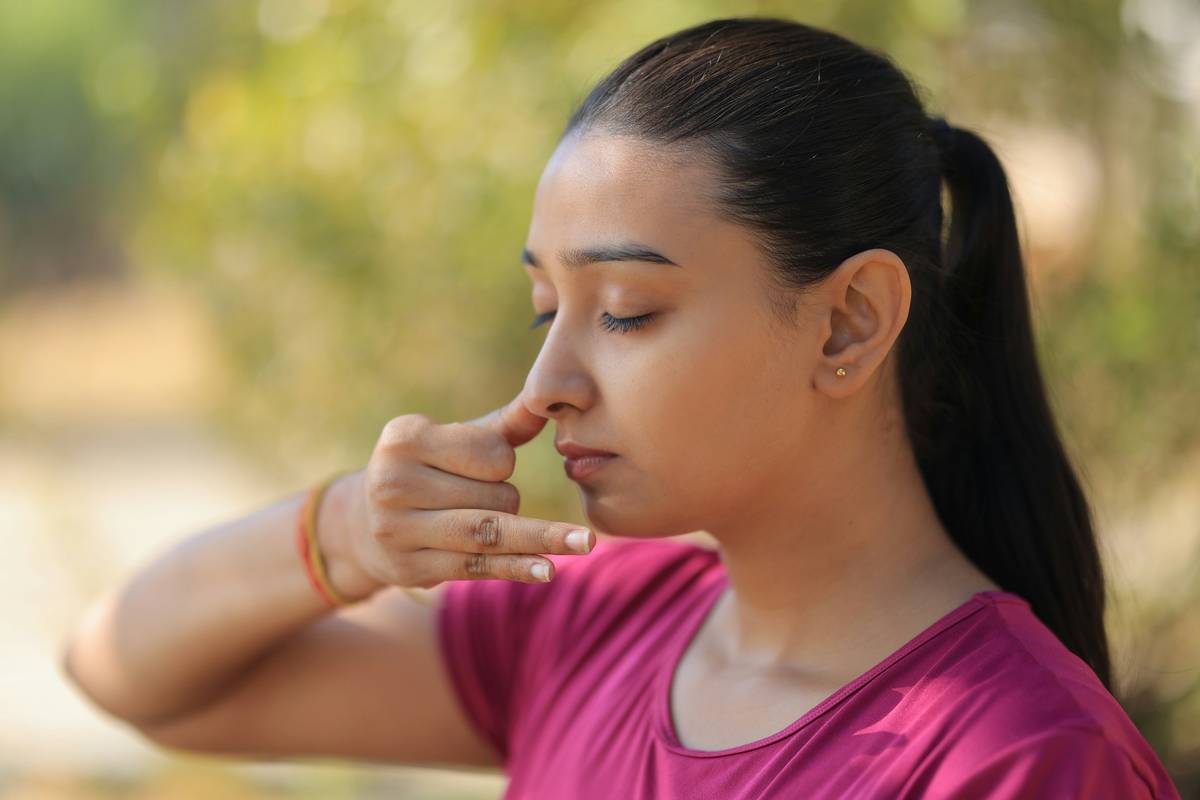
Sit or stand with minimal tension in your jaw, shoulders, and hands. Place one hand lightly on your belly — no force, no adjustment. Just let gravity hold it there. This tells your brain: “We’re safe enough to slow down.” (Skip this if you’re driving or operating machinery — do it while stopped at a red light instead.)
2. Inhale for 4 Counts — Not Deeper, Just Slower
Breathe in softly through your nose for a silent count of four. Don’t inflate your chest. Don’t “pull air in.” Let your belly rise *only as much as feels effortless*. Think: “a gentle tide coming in.” Force equals activation — not calm.
3. Hold Gently for 2 Counts
Pause with lungs full — but *no clenching*. If holding feels tense, reduce to 1 count. The goal isn’t retention; it’s creating a micro-pause between effort and release.
4. Exhale Fully for 6 Counts
Breathe out slowly through slightly parted lips — like fogging a mirror. Let your belly soften inward. Count silently: 1…2…3…4…5…6. If you run out of air early, stop counting. Never gasp or strain. The exhale is your nervous system’s “off switch.”
5. Repeat Just Three Times — Then Stop
That’s it. Three rounds (≈90 seconds). Not five. Not ten. Three. Why? Studies show diminishing returns past three cycles unless you’re training for advanced breathwork — and this isn’t that. After three, simply notice how your body feels *now*, compared to 90 seconds ago. No judgment. No scoring.
Tips & Best Practices
- Anchor it to existing habits: Pair your simple mindfulness breathing exercise with something you already do daily — unlocking your phone, pouring coffee, or stepping into the shower. Habit stacking builds automaticity faster than willpower ever could.
- Use the “Rule of 80%”: If your mind wanders eight times in a round, that’s okay — as long as you notice and return *at least* 80% of those times. Perfection isn’t the target. Gentle redirection is.
- Avoid this “terrible tip”: Don’t try to “clear your mind.” That’s impossible — and chasing it spikes frustration. Your job isn’t emptiness; it’s noticing thoughts like passing clouds, then softening back to breath-sensation.
- Rant moment: I’m done with wellness influencers who say “just breathe!” like it’s a magic reset button. Real stress lives in the body — tight shoulders, shallow ribs, clenched jaw. If your advice doesn’t name the physical signature of stress *and* how to physically interrupt it — it’s not helpful. It’s performative.
Real Results: Who’s Using This & What Happened
Liam, a 42-year-old ICU nurse and father of twins, started using this version of the simple mindfulness breathing exercise during shift-change handoffs. Before: frequent tension headaches and evening irritability. After 21 days of doing it three times daily (pre-shift, mid-shift, and right after parking at home), his HRV improved by 19% per Oura Ring data — and his partner noted he’d “stopped snapping over spilled milk.” This wasn’t enlightenment. It was physiology meeting consistency.
More broadly, a 2022 study of healthcare workers found that those using 90-second breath anchors three times daily reduced self-reported burnout scores by 27% over six weeks — significantly more than groups doing 10-minute guided meditations less frequently (Journal of Occupational Health Psychology). Why? Because showing up matters more than duration — especially when energy is scarce.
FAQs
- How often should I do this simple mindfulness breathing exercise?
- Three times daily yields optimal neural impact — but once counts. Consistency beats intensity every time. Start with “after I brush my teeth” — not “before every meeting.”
- Can children use this technique?
- Absolutely. Adapt the counts: inhale for 3, hold for 1, exhale for 4. Use imagery like “smelling a flower / blowing out a candle.” Many schools now embed similar anchors into classroom transitions.
- What’s the difference between this and box breathing?
- Box breathing (4-4-4-4) trains control and focus — useful for athletes or high-stakes performers. This variation prioritizes *vagal stimulation* via longer exhalation, making it gentler for beginners, trauma-sensitive users, or those with respiratory sensitivities.
- Do I need to close my eyes?
- No. Softening your gaze downward (like reading a book) works just as well — and is safer while walking or standing.
- Is this related to meditation?
- Yes — it’s a foundational subset. But unlike seated meditation, this is designed for integration: no cushion, no timeline, no “right way” beyond noticing and returning. Think of it as mental floss — not a dental surgery.
Ready to make this part of your rhythm? We’re here to support your journey — whether that’s answering questions about habit design, navigating setbacks, or building sustainable self-care that fits your actual life. Visit our Contact Us page to reach out. And if you’d like to learn more about how we ground our approach in lived experience and ethical practice, explore our About Us page. Your privacy matters deeply to us — read how we protect your information in our Privacy Policy.
One breath doesn’t fix everything.
But thirty breaths a day rewire everything.
Your nervous system remembers stillness — even when your inbox doesn’t.